Nepal today resembles the storm-lit stage of King Lear: a kingdom divided, institutions broken, and rulers blinded by their own misjudgments. What began as Gen-Z’s spirited protest against corruption and nepotism escalated into a conflagration when the state, in an act of authoritarian folly, banned social media. The young marched; the state retaliated with violence; blood spilled on the streets; and that sacrifice of youth deepened the fury of the crowd. Within a day, Prime Minister K.P. Sharma Oli, unable to withstand the gale, was forced from office.
In this unfolding tragedy, the young protesters are no seditious mob but the Cordelia of the tale – the voice of truth and conscience, refusing to flatter power, demanding integrity in governance, and paying with their lives for honesty. Their blood, shed for the dignity of democracy, remains the sharpest reminder that a republic cannot be traded away for expediency.
Advertisement
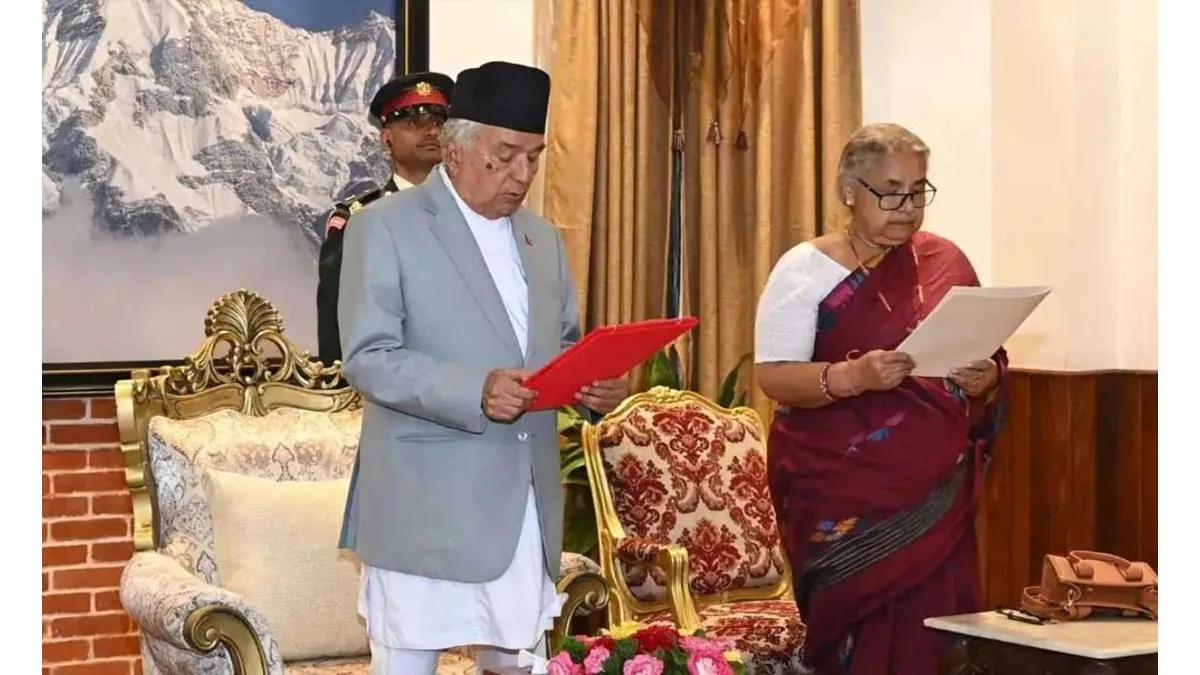
Yet, into this vacuum of power, President Ram Chandra Paudel chose improvisation over fidelity. He on the advice of a group of Gen Z representatives first anointed Sushila Karki, a retired Chief Justice, as Prime Minister – an appointment the Constitution expressly forbids. Only thereafter, upon her “recommendation,” did he dissolve the House of Representatives of the Parliament. This order of events lies at the very heart of Nepal’s present constitutional tragedy: the illegality of the appointment taints the legality of the dissolution.
What some hailed as pragmatic statesmanship is, in truth, a grave violation of constitutional order, one that risks setting dangerous precedents for Nepal’s fragile democracy. For this appointment, like Macbeth’s crown seized by dagger, may gleam for a moment but lacks legitimacy; it is born not of constitutional right but of desperation, and like Macbeth’s ill-fated kingship, it is destined to collapse under the weight of its own illegality.
The Constitution of 2015 sets out its design with crystalline clarity. Article 74 establishes Nepal as a multi-party, competitive parliamentary system of governance. Article 75 vests executive power in the Council of Ministers, with the Prime Minister at its head. Article 76 stipulates that the Prime Minister must be chosen from among the members of the House of Representatives and must command the confidence of that House. The entire architecture is parliamentary in form and spirit: rooted in accountability, sustained by party competition, and legitimized by representation.
The President, by contrast, is not an active wielder of executive power. Under Article 61, his role is largely ceremonial – a dignified custodian entrusted to formalize decisions taken by elected governments, not to compose his own script for governance. To dissolve Parliament unilaterally and appoint an interim Prime Minister from outside its benches is therefore not only irregular but unconstitutional: a usurpation of powers that transforms a symbolic head of state into an unelected sovereign.
By dissolving the Pratinidhi Sabha – the very institution that embodies popular sovereignty – and by installing a retired judge as Prime Minister in defiance of Articles 74 and 76, the President has not merely mis-stepped; he has torn through the constitutional fabric. It is a spectacle fit for Shakespeare: like Lear dividing his kingdom in a moment of vanity and blindness, the President has fractured the very order he was sworn to preserve. The tragedy is not only that power has been misused, but that the constitutional script, painstakingly written after decades of struggle, has been tossed aside for improvisation.
If the illegality of this appointment were not already evident, the Constitution itself seals the matter. Article 132(2) speaks with unambiguous finality: no person who has once held the office of Chief Justice or Judge of the Supreme Court shall be eligible for appointment to any government office. This is not a guideline to be stretched, nor a suggestion open to interpretation. It is an absolute bar, admitting of no exceptions, no escape clauses, and no shelter under the doctrine of necessity.
The framers built this constitutional firewall with deliberate care. It was designed to protect the sanctity of judicial independence, to ensure that the guardians of the law would never be seduced by the rewards of politics or be recycled into the very machinery they were once sworn to scrutinize. A judge, once retired, was meant to recede into the realm of memory and principle, not reappear on the stage of executive power.
By appointing Sushila Karki, a former Chief Justice, to the nation’s highest political office, the President did not merely bend constitutional spirit; he shattered constitutional text. What should have been the clearest safeguard became the most glaring transgression.
Her appointment is therefore unconstitutional on two counts, each damning in its own right: first, because the Prime Minister must constitutionally come from Parliament, and second, because as a former Chief Justice, she is expressly disqualified from holding any governmental office.
Here the illegality is not cloaked in ambiguity, nor softened by circumstance. It is stark, categorical, and absolute. By crossing this prohibition in broad daylight, the President has committed not a misstep but a rupture – a breach as glaring as Lear’s folly in dividing his kingdom, or Macbeth’s grasp for a crown that was never his by right.
The choreography of the President’s actions exposes a fatal flaw in the script. First, he appointed Sushila Karki as Prime Minister, in defiance of constitutional text. Only thereafter, upon her “recommendation,” did he dissolve the House of Representatives. But if the appointment itself was void, then everything that followed was tainted. A usurper’s advice carries no legitimacy; a void act cannot give birth to valid consequences.
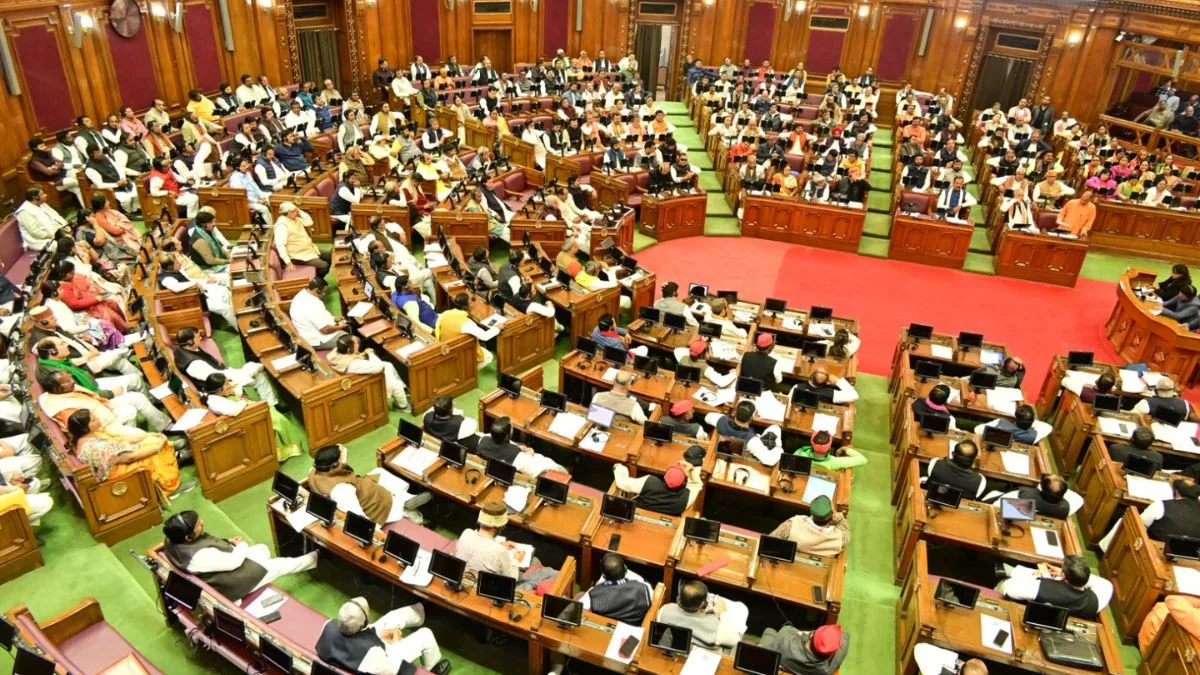
Thus, the dissolution of the Pratinidhi Sabha rests on nothing more than quicksand. The decree may have emptied its halls in practice, but in law the House still breathes. Its existence was never extinguished, for a Parliament cannot be lawfully slain by the hand of one who was never lawfully Prime Minister. In jurisprudential terms, the dissolution is a nullity – a paper crown that disintegrates at the first touch of scrutiny.
This reasoning is neither novel nor eccentric. Constitutional jurisprudence the world over recognizes that when the trigger act is unconstitutional, every subsequent act tumbles with it, like dominoes in a line. An illegal appointment cannot issue legal orders, just as Lear’s misguided division of his realm could never produce harmony, only chaos.
The consequence may seem startling but it is wholly logical: Nepal’s House of Representatives, though pronounced dissolved in fact, continues to exist in law. To borrow again from Shakespeare, it is like Banquo’s ghost – dismissed by decree yet still present at the banquet, a silent rebuke to illegitimate power.
Amid the noise of improvisation, one voice has rung out with the clarity of a bell: the Nepal Bar Association. It has condemned, without equivocation, both the dissolution of Parliament and the appointment of Sushila Karki as interim Prime Minister, warning that such acts corrode the hard-won achievements of democracy, republicanism, and federalism. Its demand for the restoration of Parliament is not a plea dressed in politics but a constitutional imperative.
The Bar’s argument has only gained force in light of the sequence of illegality. If the Prime Minister’s appointment was void, then her advice to dissolve Parliament was void as well. In that case, the Pratinidhi Sabha is not a corpse to be revived but a living institution unlawfully cast into exile. Restoration is not an act of grace but the recognition of a continuing constitutional reality.
In this, the Bar is the Fool in King Lear – the lone figure willing to speak bitter truths to power, reminding the sovereign that folly masquerading as wisdom will only end in ruin. For once the Constitution is set aside in the name of expediency, every future crisis will tempt rulers to the same shortcut, until law itself becomes a stage prop, brought out for ceremony and discarded at will.
The Bar’s alarm thus returns the burden where it belongs: to the Constitution. If Parliament is to be dissolved, it must be dissolved by the mechanisms the Constitution itself prescribes – not on the fig-leaf of a recommendation made by a Prime Minister who was never lawfully Prime Minister at all. Anything less, and Nepal’s constitutional order may echo Shakespeare’s warning of ‘sound and fury, signify nothing’ – unless rescued by fidelity to law.
To defend the indefensible, some have reached for that oldest alibi of power – necessity. Extraordinary times, they say, demand extraordinary remedies. Yet history shows that “necessity” is less the saviour of democracy than its grave-digger.
The doctrine itself has ancient pedigree. Medieval jurist Henry de Bracton once wrote that what is otherwise not lawful is made lawful by necessity, a maxim later echoed by Blackstone. But time has shown that such reasoning, seductive in its simplicity, is perilous in practice.
The most glaring example lies next door in Pakistan. In Maulvi Tamizuddin Khan v. Federation of Pakistan (1954) decided by the Pakistan Federal Court (akin to the present supreme court), Chief Justice Muhammad Munir invoked Bracton’s maxim to validate the Governor General’s dissolution of the Constituent Assembly. That single judgment, dressed in the language of necessity, inaugurated decades of constitutional subversion.
The doctrine was reaffirmed in State v. Dosso (1958), where Ayub Khan’s military coup was granted the blessing of legality. Expediency repeated became precedent; precedent repeated hardened into tradition. Pakistan’s democracy never recovered its balance. Even Justice Munir himself, in his memoir From Jinnah to Zia, seemed haunted by regret at the monster his reasoning had unleashed.
To import this logic into Nepal would be to invite the same tragedy: constitutional shortcuts, once tolerated, become a habit; and what begins as improvisation ends as erosion of the very edifice of constitutional governance.
Healthy democracies resist this temptation. South Africa, in drafting its post-apartheid Constitution, deliberately barred judges from crossing into politics, insulating the guardians of law from the temptations of necessity. India, scarred by its own flirtation with absolutism in ADM Jabalpur v. Shivkant Shukla (1976), has since repudiated necessity as anathema to constitutional rule. Nepal too must learn from these examples, not repeat their errors.
Shakespeare foresaw the danger of such self-deception: “The instruments of darkness tell us truths, win us with honest trifles, to betray in deepest consequence.” The doctrine of necessity whispers convenience, but its consequence is betrayal – the slow undoing of law by those sworn to uphold it.
The anger of Nepal’s youth, their revolt against corruption and nepotism, is no anarchic impulse but a legitimate expression of democratic conscience. Yet grievances of democracy must be healed by the remedies of democracy, not by suspending the very Constitution that embodies their hopes. The dissolution of Parliament and the fiat-like appointment of an interim Prime Minister are not signs of renewal but portents of suspension- a republic turned upon itself.
The illegality of Sushila Karki’s appointment is not a matter of subtle debate but of categorical breach. It violates the parliamentary design of executive power, exceeds the President’s limited constitutional role, tramples Article 132(2)’s explicit bar against former Chief Justices holding office, and produces a dissolution of Parliament void at its source. Each violation would be grave on its own; together, they form a tableau of constitutional wreckage.
This is tragedy in the fullest Shakespearean sense: Lear’s blindness, Caesar’s overreach, and Brutus’s misjudgment, fused into a single act of folly. The Gen-Z protesters who crowd the streets are not its villains but its Cordelia – truth-tellers whose sacrifice calls the republic back to fidelity. As Brutus himself admitted, “The fault, dear Brutus, is not in our stars, but in ourselves, that we are underlings.” The fault here lies not with fate, nor with Nepal’s youth, but with leaders who abandoned their Constitution, cloaking illegality in the rags of necessity.
Yet the quiet voice of law endures. The Pratinidhi Sabha, unlawfully dissolved, continues to exist in the eyes of the Constitution. Its restoration is not defiance but obedience – not rebellion against the law but fidelity to it. To dress this act of illegality in the robes of necessity is to repeat Pakistan’s tragic error, when expediency was enthroned as doctrine and democracy was lost for generations.
The Constitution of Nepal is not a fair-weather charter. Its true worth lies in its discipline during storms, in its refusal to bend when the gales howl loudest. To breach its explicit prohibitions, as in Article 132(2), is not to preserve democracy but to bury it beneath expediency. Fidelity, not improvisation, is the only remedy. Anything less would leave the republic like Lear’s divided kingdom- undone not by fate but by the blindness of those sworn to preserve it.
(The writer, a Ph.D. and LL.M. from National Law School of India University, Bengaluru, is an Advocate and Visiting faculty, National University of Study and Research in Law (NUSRL), Ranchi.)